Why?
Funny thing is, your mind just doesn’t care who sent the message. Blame evolution instead. Picture this: every day, 6,000 to 10,000 ads scream for attention. Yet the human brain evolved to ignore nearly everything. Forgetting isn’t a flaw – it’s the whole point.
Out of everything happening around us, only bits stick – the rest gets tossed aside without warning. What slips through tends to matter either for staying safe, fitting in, or handling whatever’s right in front of someone. If people recall other brands yet blank on yours, don’t assume your offering falls short. More often, it simply never took up space where it counts – inside their attention.
Let’s break down exactly why this happens and what you can do about it.
Your Brain’s Filtration System: Why Most Brands Get Deleted
Now here’s how your mind handles choices. One part acts quick, gut-driven, full of feeling – snapping judgments using tricks that save energy. The other moves carefully, thinks step by step, built on reason, but drains attention fast.
Most purchasing decisions happen in System 1, which relies on heuristics to navigate overwhelming choice. Competitors who secured a spot in customers’ memories have effectively installed themselves as “default” shortcuts within System 1.
If you’re forgotten, you failed to provide the psychological levers to bypass the brain’s trash folder. You probably presented information that was too complex, generic, or emotionally neutral to warrant the metabolic expense of retention.
The Amygdala: Your Emotional Gatekeeper
Every time someone engages with your brand, their brain’s amygdala checks how meaningful it feels – slapping a good, meh, or bad label on it. A so-so experience? That kind of run-of-the-mill contact usually vanishes because the mind refuses to save anything dull into lasting recall.
What sticks in memory doesn’t come from seeing something often. Feelings shape memory, while ease of understanding helps it settle. A moment lives on when it fits the mind smoothly, not just when repeated.
Your competitor remembered to make people feel something. You didn’t.
The Peak-End Rule: Why Bad Endings Corrupt Everything
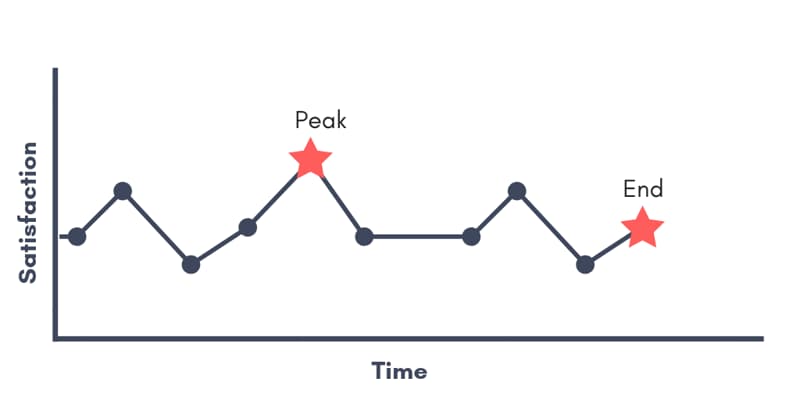
Here’s something most businesses don’t understand: human memory doesn’t record experiences like video – it operates as a curated gallery of “snapshots” or prototypical moments.
What sticks isn’t how long something lasted, but certain snapshots. Moments override minutes, even years. A brief chat weighs just like a lifelong bond when memory kicks in. Time fades; scenes stay sharp. How people recall things skips the clock entirely. Feelings anchor to peaks, not durations. Five seconds can echo louder than five decades. Duration gets ignored, again and again.
The Peak-End Rule states that people judge experiences based on how they felt at the most intense point (the peak) and at the conclusion (the end).
Even if you provide flawless service 90% of the time, a negative peak or lackluster ending can fundamentally corrupt the entire memory of your brand. On the flip side, a sudden burst of warmth at the close – say, a genuine thank-you after delays – can dissolve hours of irritation. A rough finish drags down even a steady effort. But joy tucked into the final seconds lifts the weight of what came before.
The Cold Water Experiment
The classic study proving this: participants submerged hands in 14°C water for 60 seconds (Trial A) or the same 60 seconds plus an additional 30 seconds as water warmed to 15°C (Trial B).
Despite Trial B involving longer total discomfort, participants overwhelmingly chose to repeat it because the “end” was perceived as less painful.
Memory shapes how people recall experiences. Brands that ignore this risk lose control of their story. A sudden dip in quality might stick more than long-term consistency. Without a standout moment near the close, the mind picks something at random. That chosen instant becomes the whole truth for the customer. Design matters because neglect leaves space for chance.
Distinctiveness Beats Differentiation Every Time
Here’s a myth killing most marketing: the obsession with “differentiation” – proving you’re functionally better or unique in your category.
Differentiation is a logical claim requiring System 2 processing. Distinctiveness is a visual or sensory cue triggering System 1 recognition.
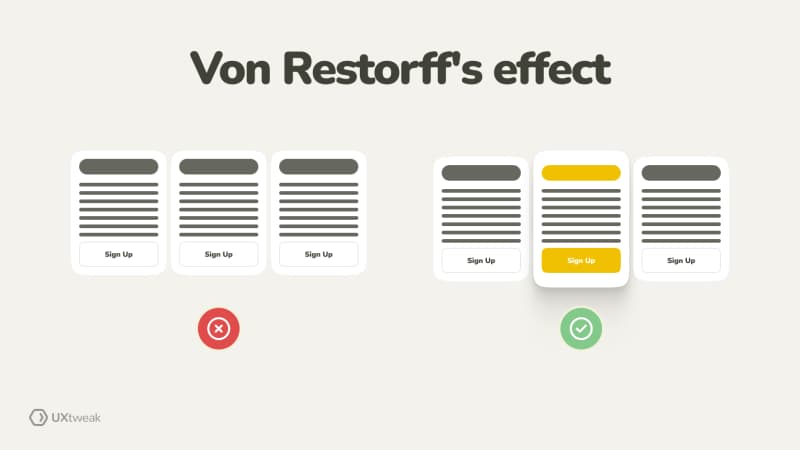
The Von Restorff Effect (Isolation Effect) demonstrates that human brains are biologically programmed to remember what stands out from their environment.
Distinctive Brand Assets: The Memory Shortcuts
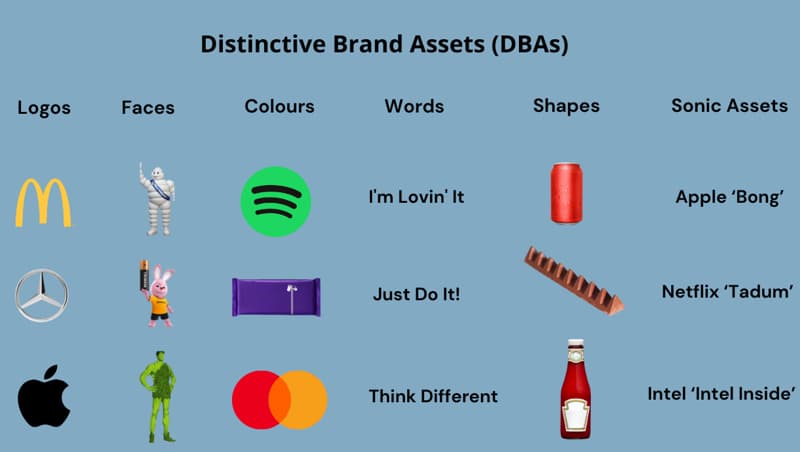
For brands to be remembered, they need Distinctive Brand Assets – non-logo cues like specific colors, shapes, sounds, or characters linking unmistakably to the brand.
When things get noisy, people lean on familiar signs to make a quick sense of what they see. That little hint means something real – but only if nobody else owns it. Spotting it feels automatic, like muscle memory kicking in. Recognition has to be instant, woven into how folks think about who you are. It sticks because it belongs to one place, and that place is yours.
When brands change visual identity frequently to follow trends, they disrupt neural associations, forcing customers to re-learn the brand from scratch, leading to forgetting.
Multi-sensory processing is key to deep encoding – brands engaging multiple senses are 65% more memorable and 12 times more likely to be recalled than those using only visual stimuli.
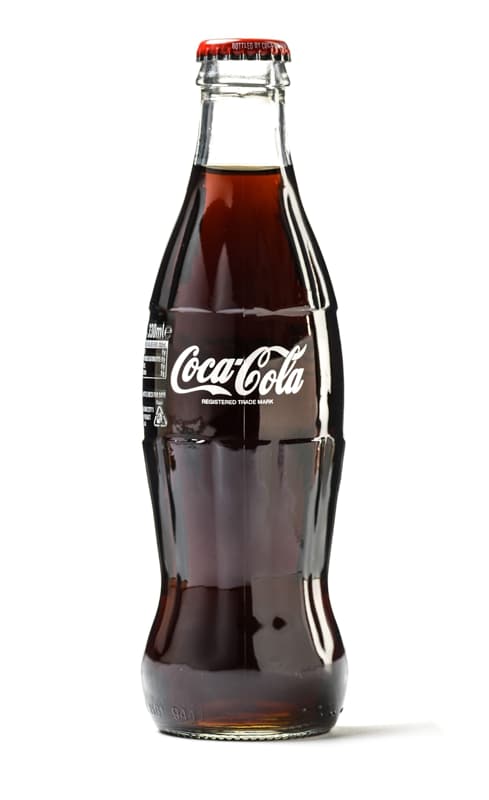
Think about the Tiffany blue box. The Netflix “ta-dum” sound. The Coca-Cola bottle shape you’d recognize in the dark. These assets provide “Mental Availability,” making brands identifiable even when logos aren’t present.
When competitors stick in people’s minds but you do not, it is often because they kept focusing on just a few strong traits year after year. You, meanwhile, shifted too much – new looks every so often, designs that blend into the background noise. Their consistency built recognition. Your changes scattered attention.
Mental Availability: The Size of Your Brand in Customers’ Heads
Brand growth is primarily a function of penetration, driven by mental and physical availability. “Mental Availability” is the probability that buyers will think of your brand in a buying situation.
This thing here? It’s not about how well people know a name. What really counts is how tightly linked those mental connections are inside someone’s head when they think of it. A brand does not float out there on its own – only shows up because memories hold pieces of it together.
Category Entry Points: Owning the Moments
The strength of mental availability depends on connections to Category Entry Points (CEPs) – thoughts, motives, or situations buyers encounter before purchasing.
For a chocolate brand, CEPs might include “looking for a snack for kids,” “buying a gift to thank someone,” or “needing an afternoon pick-me-up”.
A brand associated with more CEPs has a “larger size in the head” and is more likely to be recalled during choice situations.
Something sticks only when it fits a moment. Your name sits on the shelf while others live inside routines. A trigger happens – someone reaches for what already feels familiar. You show up everywhere yet belong nowhere. Familiarity picks the winner before the choice even appears.
The Rule of 7: Why Frequency Matters More Than You Think
Things fade over time. Back in the 1920s, movie studios noticed something odd: people only started paying attention after seeing a name about 7 times. Recognition kicks in around then. That old pattern still holds today. Seeing once isn’t enough. Messages need room to stick. Repetition builds familiarity slowly. First sight does almost nothing. It takes multiple passes for meaning to land. Seven moments of contact make a difference. Not all exposures are equal. Some sink deeper. A few get forgotten fast. Still, hitting that number raises chances. Minds need nudges, more than one. After several rounds, things start to connect.
Repeated exposure builds the “Mere-Exposure Effect,” where individuals develop positive bias toward brands simply because they’re familiar.
Why Consistency Across Touchpoints Is Non-Negotiable
The psychology behind the Rule of 7 roots in George Miller’s 1956 research showing humans can only process about seven “chunks” of information at a time.
By presenting your brand in small, frequent “chunks” across multiple channels, you ensure information is manageable and eventually moves into long-term memory.
But if your message varies wildly across channels – social media vs. email vs. billboards – the brain fails to aggregate exposures, and the “count” toward the seven-touchpoint threshold resets.
For B2B brands, Rule of 7 validates high-value decisions – prospects are rarely comfortable buying from unfamiliar entities, so multiple interactions allow research and confidence building.
When others stick in people’s minds but you do not, it means repetition has pushed them into a space where trust forms naturally. Your brand presence, by contrast, still floats outside awareness. Familiarity built through steady exposure lifts some brands into automatic consideration. Without that rhythm, yours stays unseen even if present. Recognition grows quietly over time when messages appear often enough. Absence of repeat contact leaves little trace behind.
Emotional Anchoring: Why Logic Loses to Feelings
While logic and functional benefits are processed in the neocortex, memory is anchored in emotional brain centers.
When emotions mix with experience, memory sticks better – that’s what studies reveal. Dopamine plays a key role here, lighting up parts of the brain linked to pleasure. Instead of cold facts, people remember how something made them feel. Each time someone thinks back to a moment shaped by your brand, sensation returns first. Feelings surface before details do. What remains isn’t the event itself but its emotional echo.
Brands connecting emotionally outperform competitors by 85% in sales growth. Consumers increasingly seek shared values – 64% cite these as the primary reason for long-term brand relationships.
When speed or price is all a company talks about, it fades fast once someone else does the same thing better. Feelings stick harder. They tie a product to how people see themselves. That link turns into something solid, like a mirror showing who they are. Memories form around that reflection. It stays even when new options show up.
Storytelling: The Memory Vehicle
The human brain is biologically wired for stories – they activate multiple brain regions simultaneously, making them significantly more memorable than lists of facts.
Stories left hanging stick around longer. That odd feeling when something isn’t quite done? It tugs at attention, pulling thoughts back again and again. A brand that paints its future as unfinished invites people into the journey – no neat endings, just movement forward. Minds latch onto what’s missing, returning like waves against a shore. When the path stays open, curiosity doesn’t settle.
Surprise and Delight: Creating Unforgettable Peaks
One of the most powerful ways to create peaks in customer journeys is through “Surprise and Delight” marketing – exceeding basic expectations to deliver extraordinary moments.
Surprise rewires how people notice things, making moments stick sharper in memory. When joy shows up, buyers return at 6x speed while spreading word of mouth four times more likely than usual.
Recent case studies from 2024-2026:
Hilton’s social manager spotted a clip online – staff had thrown a wedding party for a cleaner. Months passed, yet people still remembered the kindness. That moment, quiet but strong, stuck around. Trust grew without loud claims or ads. The act felt real because it was.
A surprise unfolded when Delta Air Lines spotted a social media chat about a wish to visit South Africa. Instead of ignoring it, they stepped in – offering the journey as a gift. That single reply sparked waves online. Engagement soared beyond any prior post the airline had shared.
While competitors offered free coffee on National Coffee Day, Krispy Kreme partnered with Joe Jonas to offer both donut and coffee, providing superior value that set the brand apart.
These moments succeed because they leverage User-Generated Content, which 84% of consumers trust more than traditional ads.
Brand Communities: The Defense Against Forgetting
Back in 2025, people stopped remembering brands that didn’t stick around emotionally. Belonging to a group keeps your name alive through real moments, not ads. Instead of just selling, you host something bigger – like a place where interests breathe together. What once felt transactional now hums with routine connection.
This creates an ecosystem where your brand is constantly present in consumers’ social interactions, preventing the “memory decay” that occurs in isolation.
Actionable strategies for community building:
- Peer-to-Peer Support – Apple Support Communities allow users to solve each other’s problems, creating belonging while reducing support costs.
- Co-Creation – The Lego Ideas platform allows fans to submit designs that become official products, turning customers into genuine partners.
- Gamification – Peloton uses leaderboards and “high-fives” to turn individual exercise into communal energy.
[Source: Toki]
People stick together when they feel part of something real. A shared space grows quietly inside people’s thoughts if it feels like home. Belonging comes first – then deeper purpose follows. Brands live in minds, not through ads but through presence built on trust. Connection forms slowly, then stays without effort.
When people stop remembering you, it’s because they never got a chance to talk among themselves. Without that room to interact, your business fights for every sale alone.
Why You’re Actually Being Forgotten: The Fatal Mistakes
The failure of brand recall traces to recurring strategic errors.
Inconsistency
A brand that looks one way here, another there – changing colors, voice, message depending on platform – makes people pause, rethink what they thought they knew. When Instagram doesn’t match the website, or the store feels like a different company altogether, familiarity slips away. Recognition fades each time the story changes without warning.
Mimicry
When a company follows what rivals do, its own identity fades. Standing out happens through difference, not imitation. Blend in too much, and people overlook you just as they skip past the rest.
Prioritizing Trends Over Values
Chasing virality on TikTok at the expense of a luxury brand image confuses core customers and weakens premium perception.
Lack of Cross-Departmental Alignment
Sales going solo on messages while product skips the brand plan – this splits perception wide open. Confusion grows when one hand does not know what the other does.
Successful brands like Apple and IKEA treat brand consistency as a leadership imperative, ensuring every employee is a “guardian” of brand experience.
Engineering the Unforgettable Brand
To bridge the gap between being a background option and a persistent memory, you must move beyond the spec sheet and into the lived experience of your audience, utilizing Trivia for Branding Service to transform passive observation into an indelible, high-stakes mental imprint. If presence shapes memory, then engagement is the tool that carves your brand into the consumer’s mind; by gamifying your identity, you create those deliberate “high points” and “strong finishes” that skip analytical skepticism and land directly in the gut.
This interactive strategy leverages the dopaminergic reward of a correct answer to anchor your brand to a positive emotional state, effectively fulfilling the “Rule of Seven” through active recall rather than redundant shouting. As participants engage with your story, they aren’t just reading a checklist of extras; they are entering into a social and biological contract where your name becomes the primary association for the joy of discovery and belonging.